A Place to Gather
Mira Loma has had many different clubs throughout the years- as diverse as its population!
It is perhaps one of the most perpetuated clichés about high school: that students struggle to fit in. But it is probably one of those clichés that freshmen can identify with during their first week of school. The campuses are bigger, the student bodies are larger, and the expectations are higher. While freshmen may not yet have had their growth spurts, they find themselves swimming upstream against full-grown seniors complete with driver’s licenses, jobs, and full-grown attitudes. Yet in this estuary of young teens and adults, every high school student figures out how to exist in the ecosystem of high school. Thankfully, it is not normally on their own. For many students, clubs, organizations, and school teams help create that sense of enjoyment and belonging.
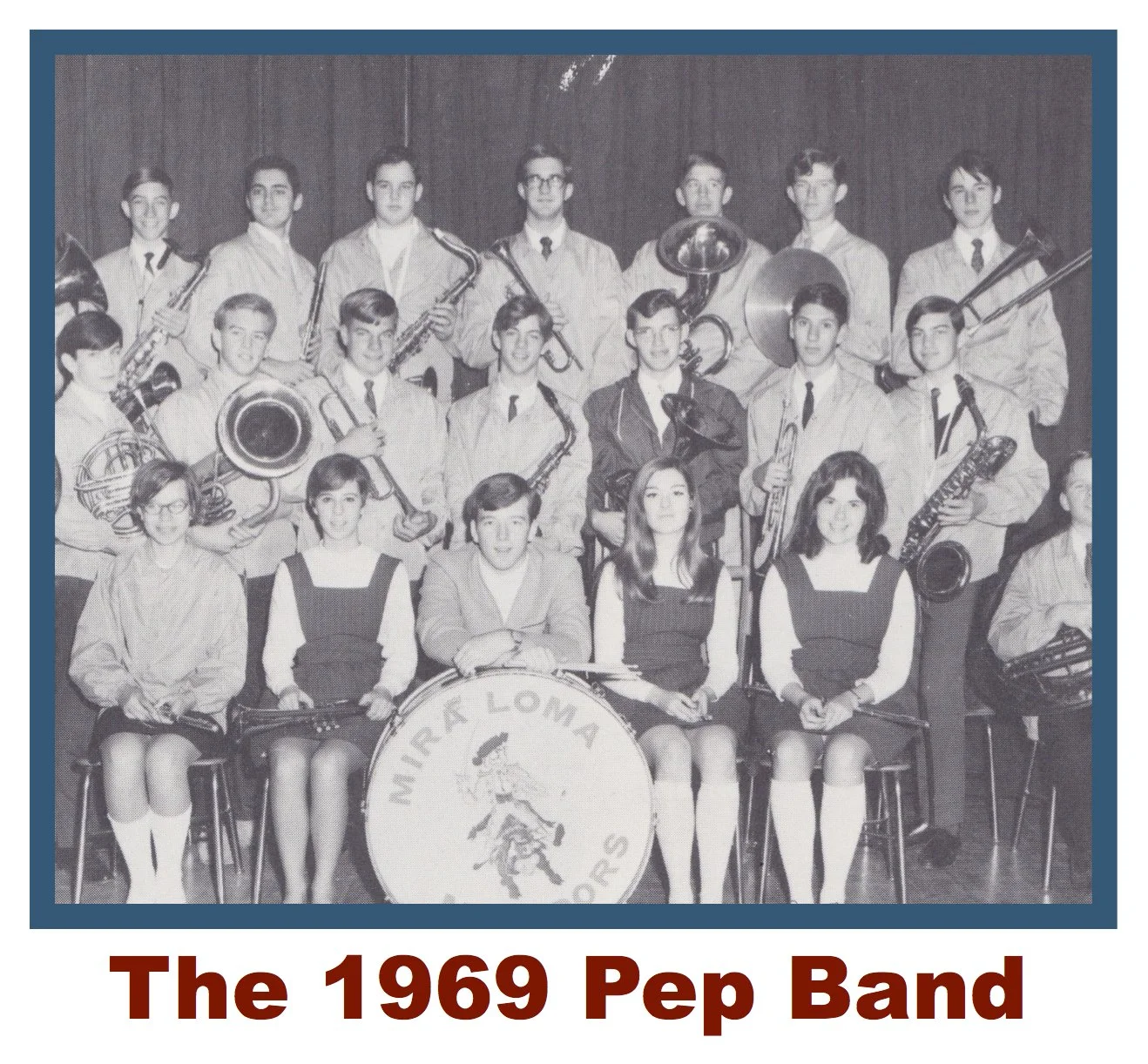
There have been many clubs that have come and gone since the first year of ML
The Pep Band might not exist in 2026 by that exact name, but there are many bands at ML currently!
In Mira Loma’s fifty-plus years, the goal of the school’s clubs has been to create a sense of pride in students, a place to find like-minded people, and an opportunity to work toward a cause as a team. Sometimes a club like “The Computer Club,” which began in the early ’80s, might have been the sort of place where early technology “geeks” found other students in the school who understood resistors, capacitors, and what effect things like “impedance” had upon them. In these small populations, many cliques developed that fostered networking abilities, personal development, and, hopefully, fun!
Because Mira Loma has seen an amazing span of cultural changes, influences, focuses, and fads, there have been some interesting clubs that have come and gone over more than 50 years. Were you, by any chance, in the German Club? As one of Mira Loma’s longest-lasting clubs, students who didn’t even study German found themselves beeinflusst (influenced) to join because of the charisma of its faculty sponsor, Herr Westrup.
For those who couldn’t stop doodling in class, Waterstreet’s Art Club was often comprised of the most expressive and creative students, rarely scared of challenging norms, pushing boundaries, and even making fun of themselves. Before Title IX, the influences of the feminist movement could be seen in clubs like the Trackettes!
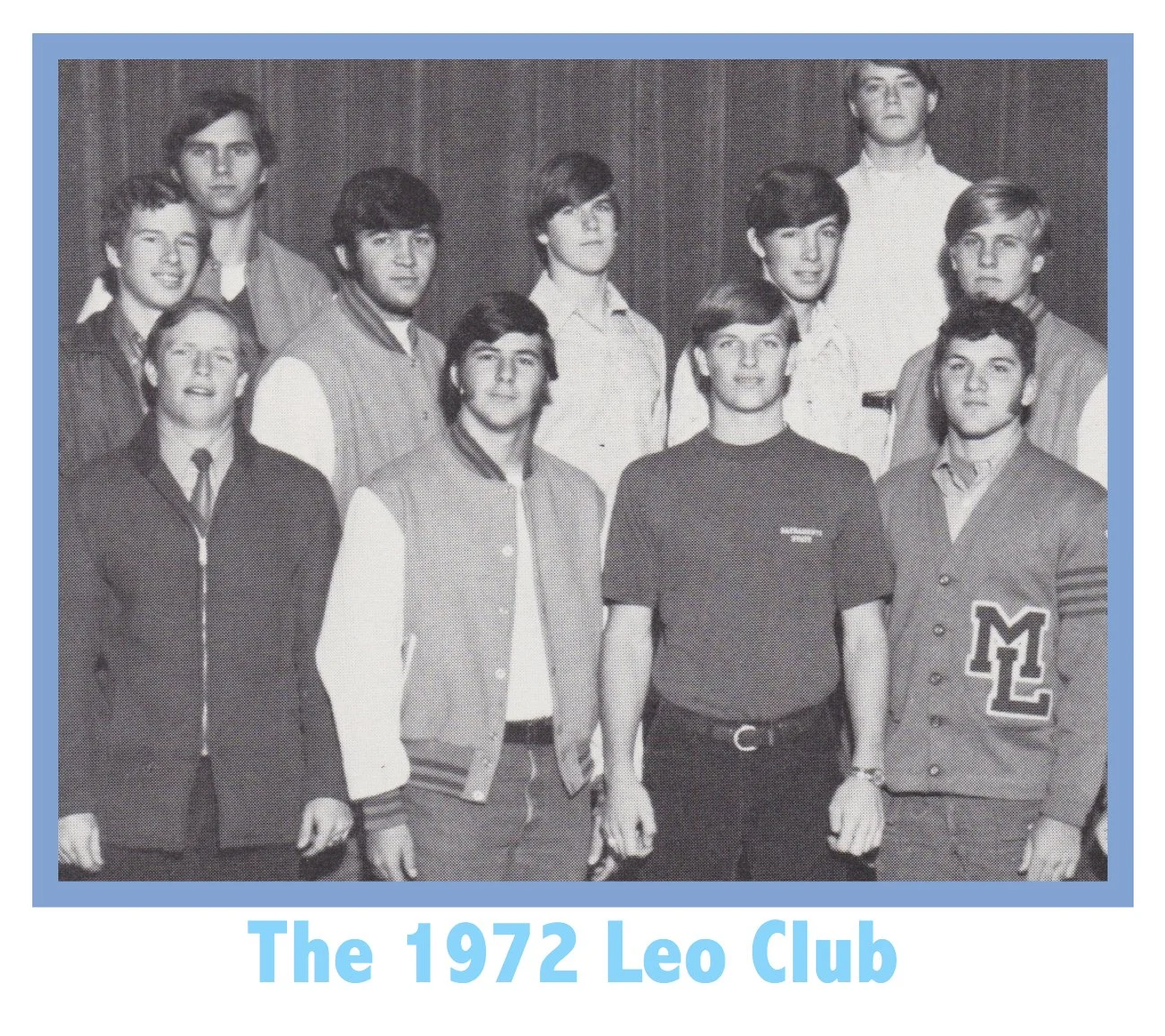
The 1972 Leo Club
The Leo Club is an example of a club that has come and gone at ML more than once!
If you “felt the music in you,” Mira Loma offered a Pep Band (the band to get the crowd going), Jazz Band and Concert Jazz Band, Gospel Choir, Concert Choir, or the A Cappellas. If you liked to argue, you could choose between Moot Court, Mock Court, and Speech and Debate clubs—and maybe learn how to talk yourself out of having to turn in a paper. Those with a dramatic flair could join Beth Adams or Guy Roberts in the Drama Club or Thespians Club, or passionately advocate for the environment in the Save a Tree Club, Recycling Club, or Green Energy Club! Cultural clubs like the Black Student Union (BSU), Muslim Student Association (MSA), Native American Club (1979), Women’s Issues Club (WIC), Asian Culture Club (ACC), and International Club allowed students to find camaraderie in similar cultural groups and expand their world by joining cross-cultural clubs.
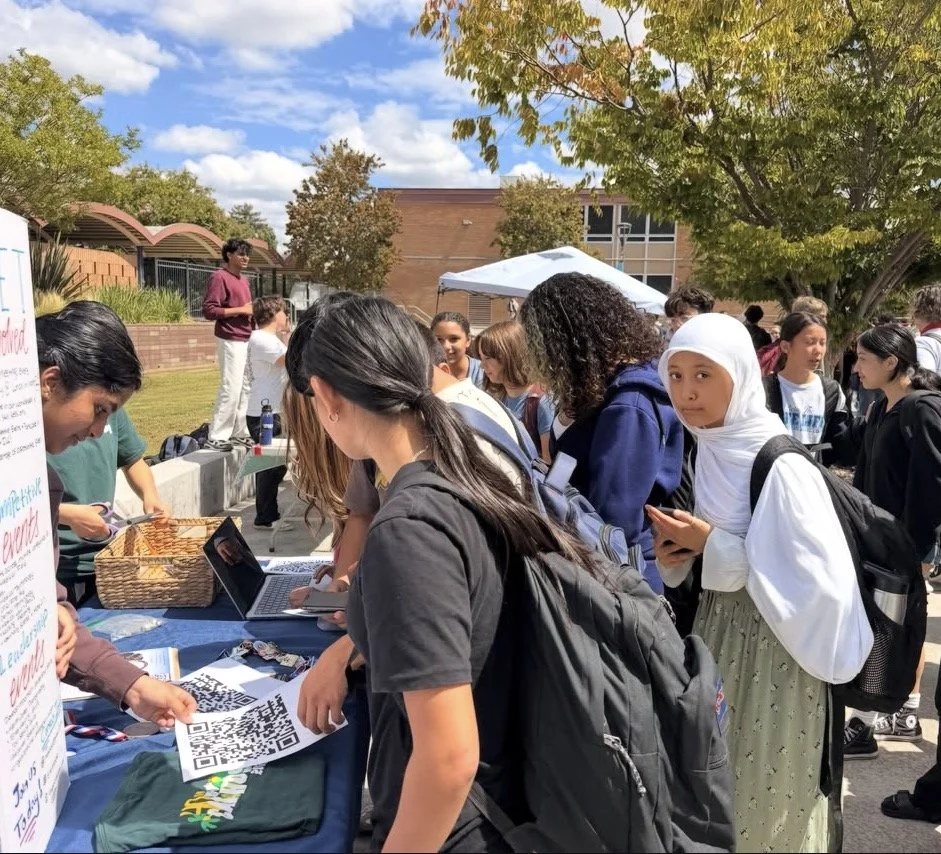
CLUB RUSH is how students at Mira Loma learn about the different opportunities available each year!
The growth of Mira Loma’s clubs seemed to follow the influences of both the community around the school and the changing times. In 1960–61, the school had to create a “student culture” from scratch! During the first year, clubs like the Coin Club, Chess Club, and Ping Pong Club started, and in the absence of many sports teams, the Gymnastics and Swim Clubs began. However, a few local chapters of community-focused organizations found their way into MLHS, like the Leo Club (a student version of the Lions Club, established in 1965) and the Save the Fish (and Whales) Club, started in 1977. Do you remember how big “Save the Whales” got? And in the 1980s, Mira Loma saw the S.A.D.D. Club (Students Against Drunk Driving, 1984) as M.A.D.D. chapters opened all across the country.
Always trying to grow up quicker than their parents would like, students created vocational-training and career-focused clubs, starting with the Key Club in the early ’60s, the Future Nurses Club (FNC, 1968), the Future Physicians Club (FPC, 1976), and the Amanuensis Club, which taught students how to be ready for the labor force. Other organizations were more broad, like the Capers crew, who enjoyed writing, journalism, and photography.
JSA (Junior States of America) and Marketing Clubs had their time filled with students interested in media, government, and politics. However, some students weren’t as sure as FNC or FPC members about what they wanted to be, but they loved to “geek out” over the newest technology crazes. Were you in the Astronomy Club of the early 1970s, following humanity’s exploration of the universe? Perhaps the Radio Club piqued your interest as students learned how radio worked, how to build radios, and why everyone loved CB radios! The Radio Club gave way to the Computer Club, and the Computer Club paved the way for MESA (Math, Engineering, and Scientific Achievement).
Language clubs—French, Spanish, German, and Latin—helped some students study or simply have fun with what they were learning, whereas the always-expressive Art Club filled that creative void when your schedule just wouldn’t allow you to have a “fun class.” But the really fun student clubs to look back on, especially when thinking about the changing culture of America, are clubs like the Aviation and Rifle Clubs that parents of the 2000s would either never be able to find funding for from district offices or might not allow in their schools. The Civil Rights Club in 1967 reflected the struggles of a nation coming together, while Wrestling Club and Film Club were both created when students didn’t make a team or the school didn’t offer the class.
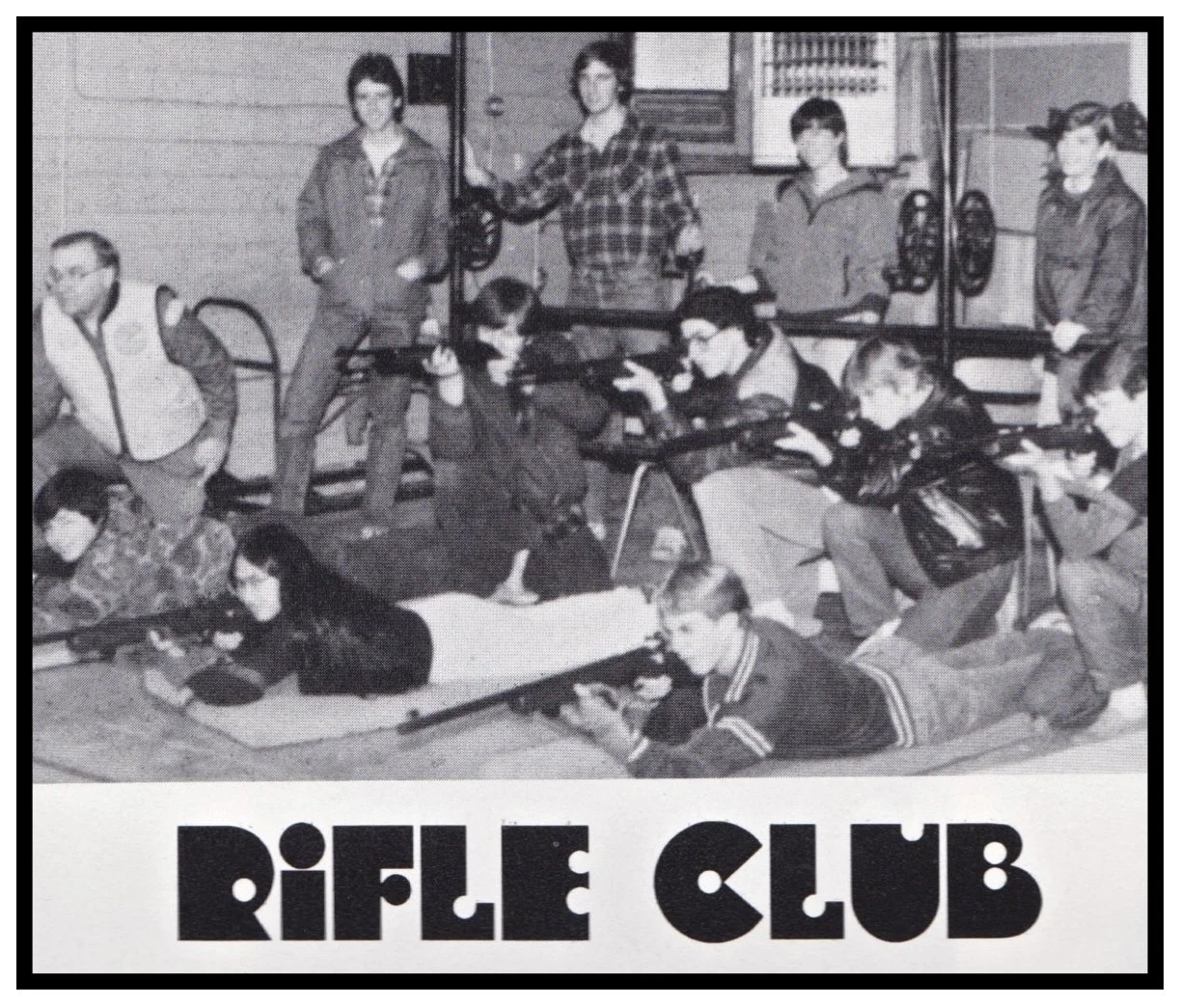
A Rifle Club at ML?
Times definitely change, but one thing that doesn’t is that the students are always interested in ANYTHING and EVERYTHING!
For a few years, there was a Star Trek Club (1976) and a Middle Earth Club. These merged in 1979 to become the Science Fiction Club, and then the Order of Excalibur Club was added in the 1980s to congregate around Dungeons & Dragons and other board games revolving around wizards and magic. Sadly, their last chapter closed years before Harry Potter, The Lord of the Rings, or the newer Star Trek movies came out.
Reading through the list of clubs that have come and gone through the years at Mira Loma High School, it is hard to believe that the school had room in its schedule for classes and that students had enough time to study. Yet Mira Loma High School has consistently been a high-achieving school, even before the introduction of the International Baccalaureate and International Studies programs in the ’80s and ’90s, respectively. Perhaps student clubs and organizations helped.
By giving students a place where they felt like they belonged, were among kindred spirits, could feel comfortable, release stress, and enjoy themselves, high school—even if only when they were in their clubs—might have felt like a place where they could prosper and grow into the adults they wanted to become. The student clubs at MLHS truly developed skills that would help in the real world, but to the students, they were also simply a place to gather and belong.